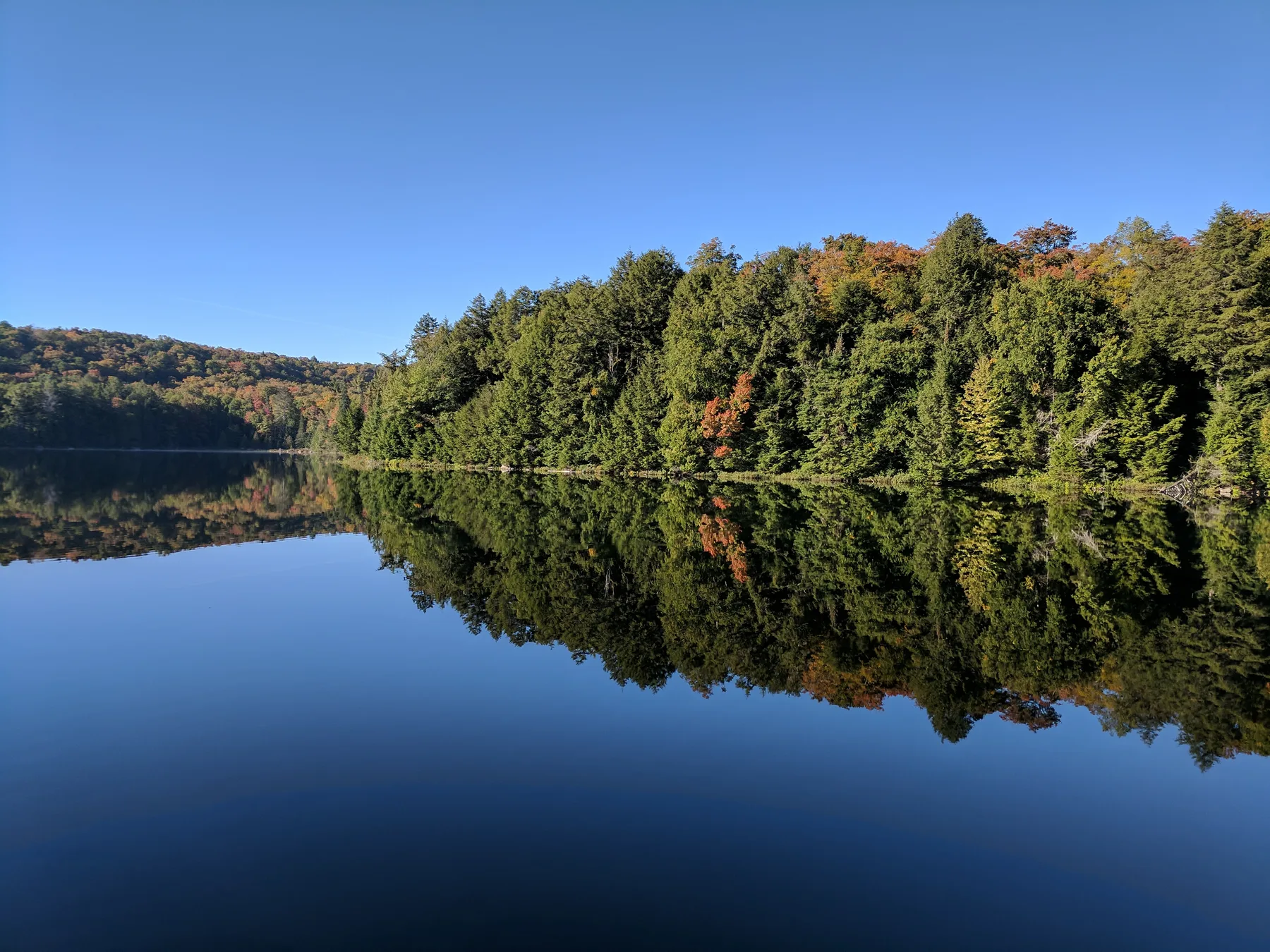
Algonquin Provincial Park does not close for winter. Highway 60 stays open year-round through the park's southern corridor, the Visitor Centre keeps its doors open, and one campground stays open for people who want to wake up to snow on the spruce. What changes is the pace: there are fewer cars, the lakes are frozen, and the park becomes a place for skiing, snowshoeing and reading tracks in fresh snow. This guide covers what is open along the Highway 60 corridor this winter, how permits work, and how to stay safe.
Getting oriented on Highway 60
The Highway 60 corridor runs for 56 kilometres through the south end of the park. Everything along it is located by kilometre marker. The West Gate, east of Dwight, is kilometre 0, and the East Gate, west of Whitney, is kilometre 56. The Friends of Algonquin Park put the park about 250 km north of Toronto and about 260 km west of Ottawa.
The markers that matter most in winter:
- Fen Lake Ski Trail: at the West Gate
- Minnesing Ski Trail: km 23
- Mew Lake Campground: km 30.6
- Sunday Lake multi-use trail: about km 35.5
- Algonquin Visitor Centre: km 43
- Leaf Lake Ski Trail: about km 54
- Algonquin Logging Museum trail: km 54.5
For an overview of the whole park, see our Algonquin Provincial Park listing.
Permits: buy before you go
You do not need a permit simply to drive through on Highway 60, which is a provincial highway. As soon as you stop to use a park facility, such as a trail, a parking lot or the Visitor Centre, you need a park permit.
In winter, Daily Vehicle Permits for day use are sold only online or by phone, not in person. Online sales open at 7 a.m. each day, and you can buy up to five days ahead. The Friends of Algonquin Park day-use page listed the Highway 60 Daily Vehicle Permit at $21 per vehicle per day, including HST, when we checked. Fees are subject to change, so confirm before you go. A valid park permit is also what you need to use the ski trails. We found no separate ski-trail fee on the official pages.
Cross-country skiing
Ski trails typically open in December and close in March, depending on snow. Trail condition reports resume each December on the Friends of Algonquin Park website.
Fen Lake Ski Trail (West Gate)
Fen Lake is the closest ski trail if you arrive from Huntsville or Dwight. It has 17.5 km of groomed, track-set loops of 1.1, 4.9, 5.4 and 9.4 km, so a beginner and a strong skier can share a car and still both have a good day. A 6 km section also has a lane for skate skiing.
Leaf Lake Ski Trail (east end)
Leaf Lake, near the East Gate, is the park's long-distance option. The Friends of Algonquin Park describe loops from 5 km up to about 45 km, groomed and track-set, plus three loops groomed for skate skiing. Shelters and toilets are available at several points.
Minnesing (km 23)
Minnesing is for experienced skiers who want a wilder trail. It is not groomed or maintained, with loops from about 4.7 to 8.2 km. Go with a partner and allow plenty of daylight.
Walking, snowshoeing, skijoring and dogs are not permitted on the groomed, track-set ski trails. This protects the tracks for everyone.
Snowshoeing and winter walking
Snowshoers can go almost anywhere in the park except on the groomed ski trails. Two good options:
- Sunday Lake Trail (about km 35.5) is groomed for snowshoeing, dog sledding and skijoring.
- Old Railway Trail is groomed for roughly 12 km between Pog Lake and Cache Lake.
The Algonquin Logging Museum reception building and bookstore close for the winter. The Logging Museum Trail and its outdoor exhibits are still accessible by snowshoe or ski, which makes a quiet history walk at the east end of the corridor.
Winter camping at Mew Lake
Mew Lake (km 30.6) is the only campground in the park with developed camping year-round, and reservations are required. In winter, Ontario Parks rents six yurts and four cabins there. The yurts have basic furniture and electric heat. Sites 1 to 66 have electrical hook-ups, and the main roads near those sites are plowed. A heated, winterized comfort station has drinking water, flush toilets, showers and laundry. Part of the parking lot becomes a skating rink when the weather allows.
Yurts and cabins can be booked up to five months ahead, and winter weekends fill quickly. Canisbay Lake is plowed but closed for the winter.
The Visitor Centre
The Algonquin Visitor Centre at km 43 is open year-round, including most holidays. From November 1, 2026, Ontario Parks lists its hours as 9 a.m. to 4 p.m. daily. The West and East Gates move to 8:30 a.m. to 4 p.m. daily from November 2. Holiday and extended hours are posted on the park's events calendar. The Visitor Centre is the warmest place on the corridor to learn about the park's wildlife and history, and to check conditions before heading out.
Wildlife in winter
Winter is a good season for tracks. The Friends of Algonquin Park note that visitors often find the tracks of deer, moose, martens, fishers, otters, foxes and wolves. Common ravens, Canada jays, boreal chickadees and winter finches are frequently seen. Moose are sometimes attracted to the highway itself, so drive slowly, especially at dawn and dusk.
Feeding wildlife is illegal in all Ontario provincial parks, including the jays that land on outstretched hands.
Staying safe
- Stay off the ice. The park advises against ice travel because hazards are hard to detect.
- Expect no signal. Cell coverage is generally limited to a few kilometres on either side of Highway 60.
- Dress for real cold. The park's winter guide warns that nights can reach -40°C.
- Know the rules. Fishing is not permitted in winter, and snowmobiling is not permitted in the park apart from one designated hydro-line corridor. Arowhon Road is not plowed.
- Check alerts. Ontario Parks posts current closures and hours on the park's alerts page.
Whose land this is
Algonquin Park lies within the traditional territory of the Algonquin people. The Algonquins of Ontario describe their land claim area as including most of Algonquin Park, within a traditional territory of more than nine million acres in the Ottawa and Mattawa River watersheds, and they describe their rights as never surrendered. The Algonquins of Pikwàkanagàn First Nation describe their community as part of the Algonquin Nation's traditional and unceded territory. To learn more, start with the Nations' own websites.
Make a weekend of it
Pair a day of skiing at Fen Lake with a night in Huntsville, or continue east and south to the Haliburton Highlands in winter. Algonquin Outfitters at Oxtongue Lake lists Nordic ski and snowshoe rentals; call ahead to confirm winter hours. For summer planning, see our guide to Canoe Lake.